How to Plan a European Christmas Market Trip: What to Know Before You Go
Planning a European Christmas market trip sounds fun until you’re trying to decide which cities to visit, when to go and how many markets you can realistically fit into one trip.
Trust me, I know. I’m working through those decisions myself as I write this, and it’s not my first time planning a Christmas market trip.
I’ve planned Christmas market trips with my kids through Germany, Vienna, Prague, Bratislava and Luxembourg. We’ve moved between cities too quickly, stayed farther from the markets than I’d have liked, and arrived on an opening weekend so busy I nearly gave up on the whole trip. We’ve also gone back on a weekday and had a completely different experience.
Those trips have changed how I plan. Here’s what I check before booking a European Christmas market trip, from choosing destinations and dates to planning a route that doesn’t leave us rushing between cities.
This post contains affiliate links. If you make a purchase through one of these links, we may earn a small commission at no extra cost to you. As always, we only recommend products and experiences we truly believe in.
Different Types of European Christmas Markets
Not all European Christmas markets are the same, and that’s part of what makes visiting several so much fun. Some are large markets with rides, lights and entertainment, while others are held in historic squares with traditional wooden stalls.
You can even find different types of markets within the same city.
Large City Christmas Markets
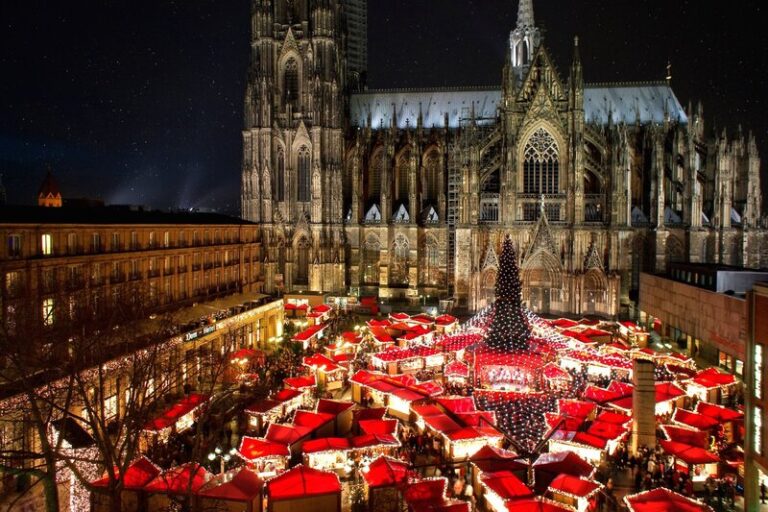
Cities like Vienna, Cologne and Düsseldorf have several Christmas markets, often spread throughout the city. In Cologne, for example, you’ll find the Cathedral Christmas Market, the Heinzels Winter Fairytale in the Old Town and the Harbour Christmas Market near the Chocolate Museum.
Along with the traditional stalls selling food, drinks and gifts, you’ll often find other activities like Ferris wheels, carousels, ice skating and other rides.
These are also some of the more well-known Christmas market destinations, so they can get quite busy, especially on weekends and in the evenings.
Smaller Historic Christmas Markets
Smaller cities and towns can be just as festive, especially when markets are held in historic squares or surrounded by traditional buildings.
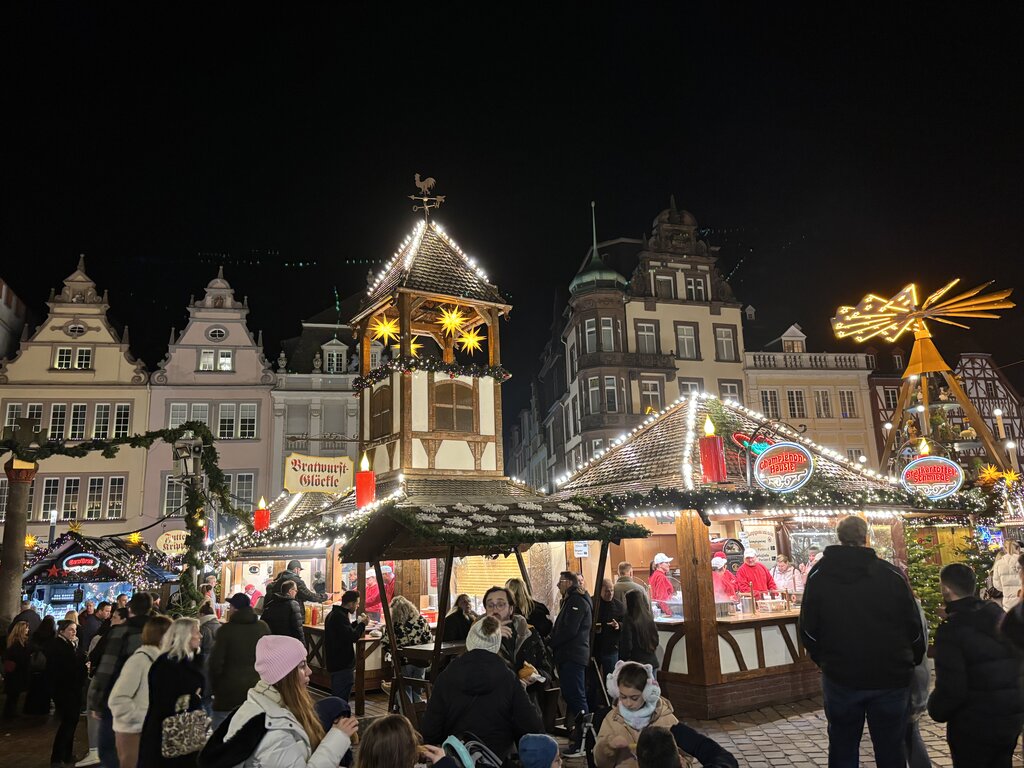
We’ve loved visiting markets in places like Trier, Heidelberg and Esslingen. They’re a different experience from the larger city markets and can be a great addition to a Christmas market itinerary.
Some smaller markets have rides or activities too, but others, like Trier, are more focused on the traditional market experience.
Themed and Speciality Christmas Markets
Some markets have a particular theme or focus. Vienna’s Karlsplatz market is known for its arts and crafts, while Stuttgart has a Finnish Christmas Village alongside its traditional markets.
These are worth looking for when you’re researching a destination, especially if you want to experience something beyond the traditional food and gift stalls.
Advent Markets
Not every Christmas market runs for several weeks. Some smaller Advent markets take place only on certain weekends, while others may be open for just a few days.
For example, the Christmas market in Kaysersberg, France, is only open on Fridays, Saturdays and Sundays during Advent.
These are worth checking before you finalize your trip. If there’s a particular market you’d like to visit, you may need to plan your dates around it.


How to Plan a European Christmas Market Trip
There’s no single right way to plan a Christmas market trip. I start with the places I most want to visit, then compare dates, flights, transport and accommodation before settling on a route. Here are the steps I work through.
1. Decide which Christmas markets you want to visit
Start with the markets or cities you’re most excited to see. Germany may be the first place that comes to mind, but Christmas markets are held all across Europe. You could focus on German cities, pair Vienna and Prague, explore the markets in Alsace, plan a trip around markets in Poland, or combine markets in nearby countries.
I usually have a destination or area in mind before I compare flights. For one trip, I really wanted to visit Vienna, so I looked at ways to make that happen. We flew into London and then on to Vienna, with Prague and Bratislava included in the trip.
Another time, I knew I wanted to visit German Christmas markets but hadn’t decided which cities to visit. I compared flights to the region, chose the best-priced option that worked for our dates, and built our route around nearby markets.
You don’t need to choose every stop right away. Make a shortlist, then compare how well each option fits your dates, budget and travel time.

2. Choose when to go and check market dates
Most European Christmas markets take place during Advent, usually from late November through December, although some open earlier and other markets stay open into January.
When you visit can make a difference to which markets are open and how busy they are.
| When to visit | What to consider |
| Mid-to-late November | Some markets may not have opened yet, but you can visit those that start earlier in the season. |
| Early-to-mid December | A good time to visit when most traditional Christmas markets are open. Weekends can (will) be especially busy. |
| Late December | Some markets close before Christmas, while others continue until New Year’s or into January. You’ll need to choose destinations carefully. |
I usually prefer visiting in late November or early December. It’s still early in the Christmas season, but there’s plenty of time to explore the markets before Christmas itself.
Before booking anything, check the official opening and closing dates for every market you want to visit. Don’t assume all the markets in one city follow the same schedule.
Pay particular attention to smaller Advent markets, which may only operate on certain weekends. Check daily opening hours as well, especially if you’re planning to arrive in a city later in the day.
I recommend checking the current year’s dates on official tourism or market websites. You can also start with my individual Christmas market guides, where I’ve included opening dates and other planning details.
3. Compare destinations and flights together
A cheaper flight can make a destination more appealing, but it’s only one part of the cost. Look at the number of connections, total travel time and how much it will cost to reach the first market from the airport.
My travel dates usually have some flexibility, although I like to plan around my birthday. You might have school holidays or a fixed week off to work around instead. Start with the dates you can travel, then compare a few realistic options.
Try not to build a trip around a low airfare before checking the rest of the costs. A flight deal may not be such a good deal if it adds an expensive connection or a long journey to your first stop.
4. Decide how many days you need
Think about how much time you want in each place, not just how many cities you can fit into the trip.
We’ve done plenty of one-night stays over the years, but usually prefer at least two nights in a destination when possible. We can arrive in the afternoon, visit a market that evening, then have the next day to explore before returning to the market (or another if the town has more than one) in the evening.
The right amount of time depends on the place and what else you want to do. We spent roughly 24 hours at the Trier markets, including an evening and an overnight stay. That worked for us, although I could have stayed longer.
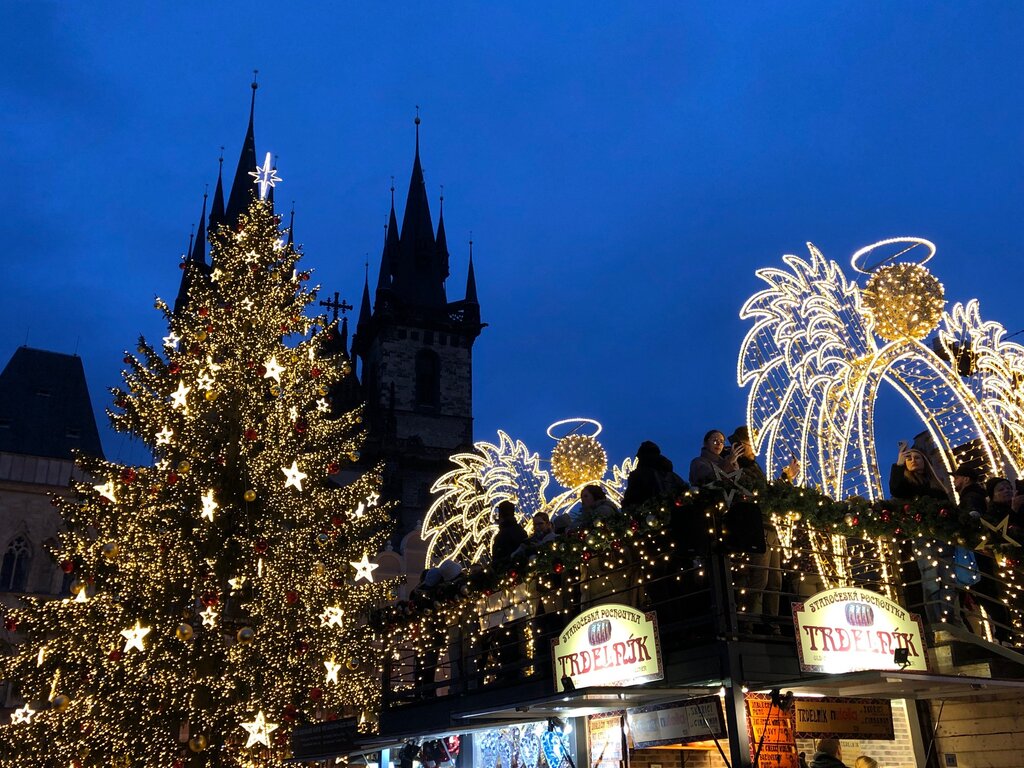
But other places, like Vienna, are different. I’d allow at least three or four nights because there’s just so many Christmas markets in Vienna, along with plenty of sightseeing.
As a general guide:
- 2–3 days: Focus on one city and its Christmas markets.
- 4–5 days: Explore one larger city and add a day trip to a nearby town, or visit two cities that are well connected.
- 7 days: Combine two or three destinations, with time for sightseeing and possibly a smaller market along the way.
- 10 days or more: You have more flexibility to combine several cities or countries without changing hotels every night.
You don’t need to visit a different city every day. Some destinations have enough markets to fill several evenings, and it’s nice to have time to explore beyond the markets too.
I always suggest leaving a little room in your itinerary. Sometimes you’ll find a market you want to return to, or a city you wish you had more time to explore.
5. Build a route that makes sense
Once you’ve narrowed down the destinations you’d like to visit, it’s time to see how they fit together.
I usually start with a major city that has good flight options from our home airport, then look at which other Christmas markets we can visit nearby or along the way.
You don’t need to visit every famous market in Europe on one trip. It’s often easier to choose one area and explore several markets in that region rather than spending half your trip travelling between destinations.
Start with a main destination and look at what’s nearby
If you’re flying into Frankfurt, for example, you could explore markets in western Germany, including Heidelberg or Trier. Or you could base yourself in Cologne and visit Düsseldorf as a day trip.
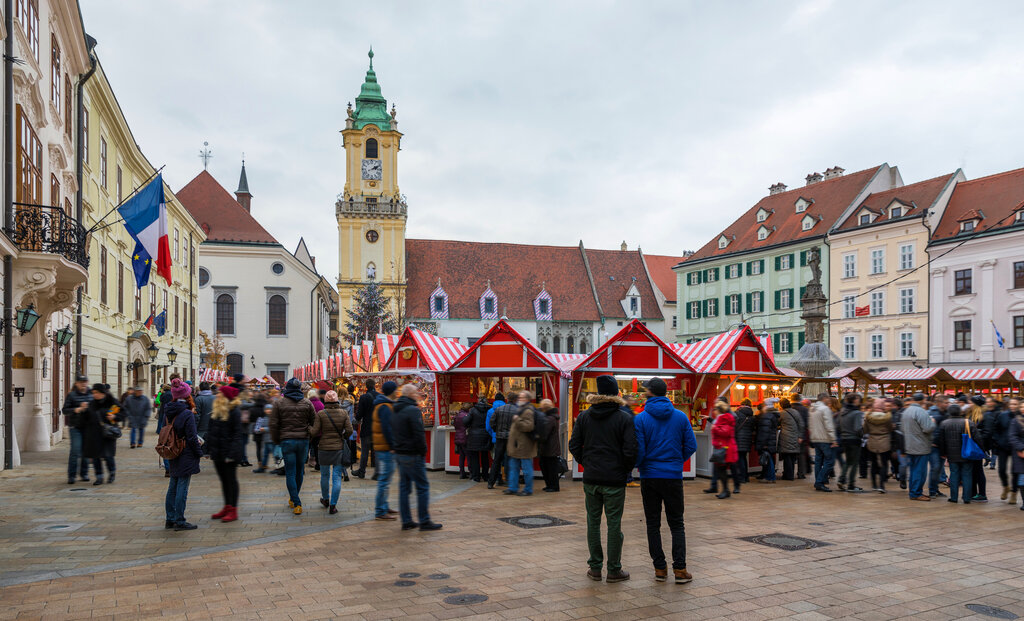
If Vienna is your main destination, you could spend several days exploring its markets, then consider visiting Bratislava’s Christmas markets.
Look at a map and make a shortlist of places that interest you, but check the actual train or driving times before adding them to your itinerary.
Decide whether to stay in one place or visit several cities
There are two ways I usually approach a Christmas market trip.
The first is to stay in one city and take day trips to nearby markets. This works particularly well if you’re only travelling for a few days or don’t want to keep changing hotels.
The other option is to plan a route between several cities. We often book flights into one city and home from another, then visit places along the way.
This is sometimes called an open-jaw or multi-city flight, and it can save you from having to travel all the way back to your starting point.
Don’t add stops just because they’re nearby
A town might look close on a map, but that doesn’t necessarily mean it’s easy to reach. Check train connections, transfers and how much time you’ll actually have to explore once you arrive.
I also recommend checking whether a smaller town works better as a day trip or an overnight stay. You may be able to visit its Christmas market without packing up and moving hotels again.
And remember, you don’t need to visit another market every day to have a good trip (although I know it’s tempting!).
If you’re putting your route together, my free family trip planner has space for flights, accommodation, transport and daily plans for up to 10 days.

6. Decide how you’ll get between stops
For our Christmas market trips, trains and public transport have worked well for getting between the cities we chose. I’ve rented cars many times in Europe, but usually rely on the train when we visit in December.
If your route includes smaller towns or markets outside the main rail network, compare the total journey time, rental and fuel costs, parking, and how easy it will be to reach each market.
If you’re thinking about visiting smaller towns or several markets outside the main cities, check how often the transport runs and how late you can get back.
Price the journeys before you add extra stops. Several short train trips can add up, and a route that looks simple on a map may involve more transfers than you expect.
If you’re renting a car, check out Discover Cars for the best rates.
7. Book accommodation with location in mind
Where you stay can make a big difference at the end of a long day. I like being close enough to a market that we can pop back to the hotel for a break, especially if the weather turns.
One year, it rained all day and we were staying quite a way from the market. Getting back in wet clothes felt like a much bigger effort than it should have.
But your hotel doesn’t necessarily need to be right beside a Christmas market.
If you’re planning to visit several nearby towns by train, staying near the main train station can be more convenient. You can head out for the day without having to cross the city every morning.
If you’re spending several days exploring the markets in one city, I’d look for somewhere within easy reach of the markets you want to visit.
Before booking, I usually check the hotel’s location on a map, how easy it is to get there from the station or airport, and whether we’ll need public transport to visit the markets.
And I recommend booking early (even though I’m guilty of not listening to this advice myself).
When I was planning our latest trip, I left it late to book accommodation in Salzburg. By the time I looked, the hotel prices, or what was still available, were far beyond what I wanted to pay. Salzburg went back on our future list!
I suggest checking accommodation costs while you’re comparing destinations. That way, you’ll know whether the trip still works before committing to flights.
Looking for somewhere to stay? I usually start by comparing hotels on Booking.com, checking prices, locations and recent reviews before booking.
If you’re planning to visit Vienna or Cologne, I’ve also put together guides on where to stay in Vienna, best hotels in Prague and where to stay in Cologne, including areas to consider when choosing accommodation.
8. Plan around the crowds
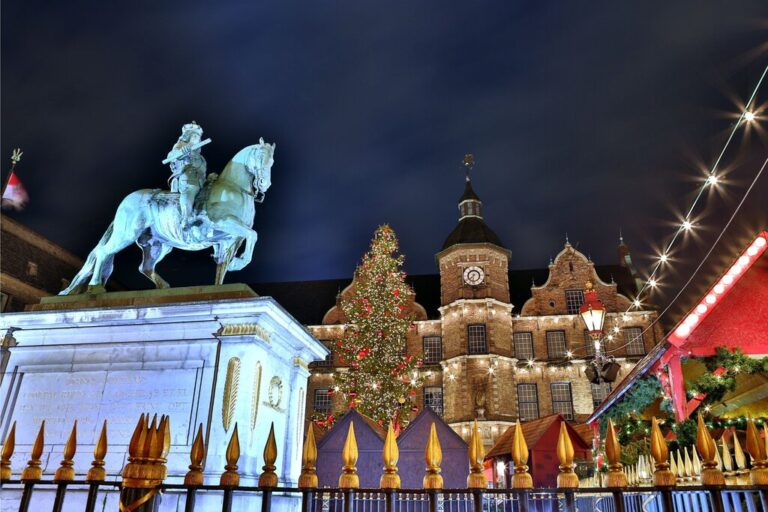
The first time we visited a Christmas market, it was in Düsseldorf on opening weekend. It also fell over American Thanksgiving and Black Friday. The crowds were overwhelming, I wasn’t prepared for that, and I nearly cancelled the rest of our trip.
But luckily I didn’t. We took a break and went back on Monday and Tuesday and it was so much nicer. If it hadn’t, I don’t think we’d still be visiting Christmas markets!
So my advice: choose weekdays where you can. If your dates include a weekend, leave room in your plans to take a break and return later. We’ve also visited Cologne’s markets, and found it to be more enjoyable away from the busiest weekend periods, or later in the evening after some of the crowds have moved on.
9. Leave time to explore beyond the markets
When I decide how long to stay somewhere, I look at the city as well as the markets. We always try to fit in some sightseeing, and that’s harder when you arrive one afternoon and leave again the next morning.
We’re usually fast travellers. As I’m getting older, though (and my kids as well), I’m finding I’d rather leave more time to explore each place beyond its markets. It’s nice to enjoy a city without feeling like we’re already rushing on to the next stop.
Build in something everyone wants to do, along with time for breaks. A market can be part of the day, not the only plan.
10. Set a budget for the whole trip
It’s easy to budget for flights and accommodation, then forget how much it costs to travel between cities, never mind to enjoy the markets.
When you’re setting your budget, be sure to Include flights, accommodation, intercity transport, airport transfers, local transport, meals, market purchases and paid activities. If you’re considering a rental car, include parking and other driving costs.
You’ll also want to check ticket availability and fare conditions for your actual dates. Timetables and booking windows can change, so don’t assume a journey is already on sale just because you can see it in your plans.
11. Find out what to expect at each market
Not all Christmas markets are the same (even though my mom seems to think they are!).
Before you go, check a few practical details, including payment methods, food options, toilets and whether there are any special activities or events you’d like to see.
Bring some cash. Many markets accept cards, but smaller stalls may only take cash. And if you’re visiting markets in different countries, check whether you’ll need different currencies.
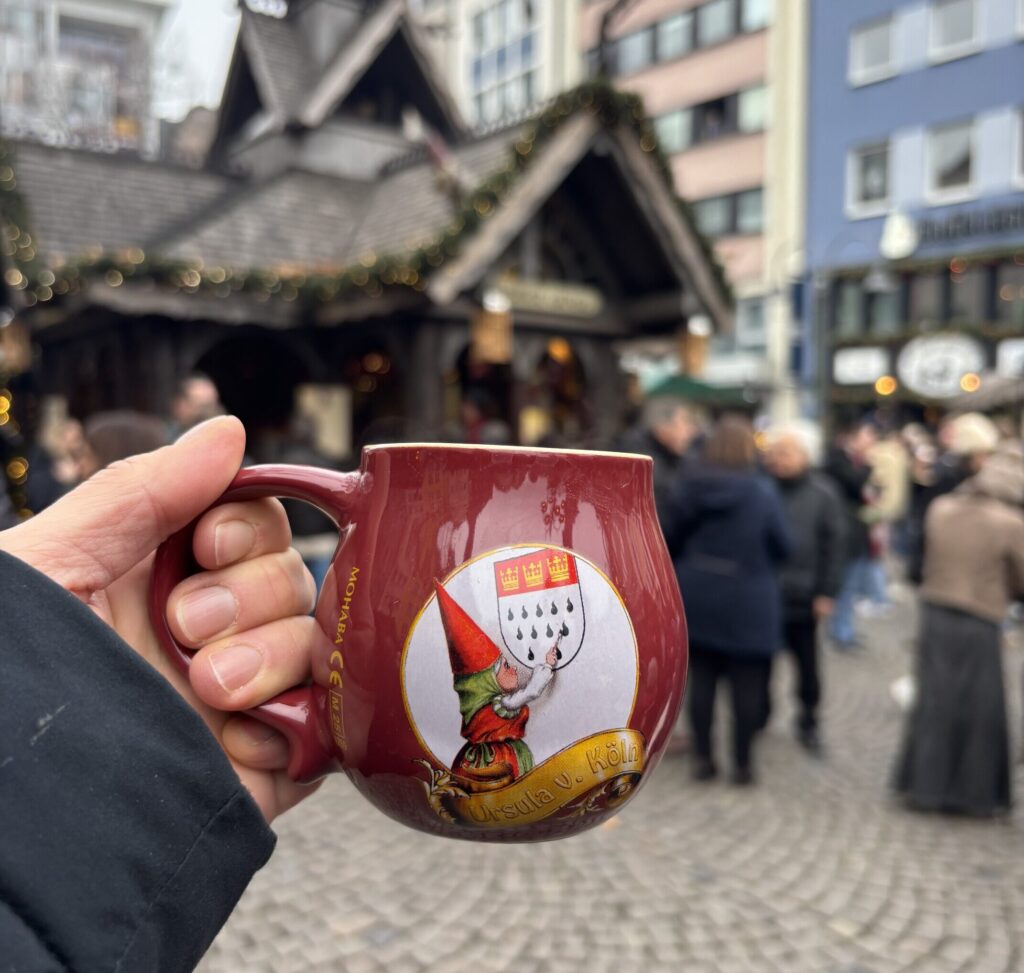
You’ll probably also notice that drinks are served in ceramic mugs rather than disposable cups. At many markets, you pay a deposit, called a Pfand, which you get back when you return the mug. Or you can keep the mug as a souvenir!
If you’re curious about why people collect them, here’s everything you need to know about Christmas market mugs.
It’s also worth checking whether markets have carousels, skating rinks or other activities, especially if you’re travelling with kids.
And if you’re planning to shop, leave some room in your budget and luggage for anything you bring home.
12. Check what needs to be booked ahead
Once you know which places you want to visit, check whether any attractions, tours or special events need advance reservations. The Ravenna Gorge Christmas Market in Germany is a good example: it requires a pre-booked online ticket for a specific time slot, and there’s no ticket office on site. Check its current ticket details before building it into your route.
13. Pack for cold, damp weather
Snow would be lovely, but I wouldn’t count on it. We’ve been rained on at some point during every Christmas market trip we’ve taken, and somehow it hasn’t stopped us going back. It can’t be too bad!
Still, cold rain and damp shoes can wear you down. Pack waterproof footwear, a rain jacket, warm layers and warm socks. Check the forecast before you leave, then use my Christmas market packing guide for more clothing tips and a free packing checklist.
Our take on planning a European Christmas market trip
When you plan your Christmas market trip well, you’ll have time to enjoy both the markets and the places around them. Choose a few destinations that appeal to you, check their market dates, then build a route that fits your travel days and budget. Leave enough time in each stop to explore, take breaks and visit the markets in the evening.
Still choosing which Christmas markets to visit?
If Germany is on your list, start with our guide to the best Christmas markets in Germany, or read all about Cologne Christmas markets or our favourite, the markets in Stuttgart. If you’re looking to explore outside of Germany, be sure to consider the Christmas markets in Prague, or the Luxembourg Christmas markets.