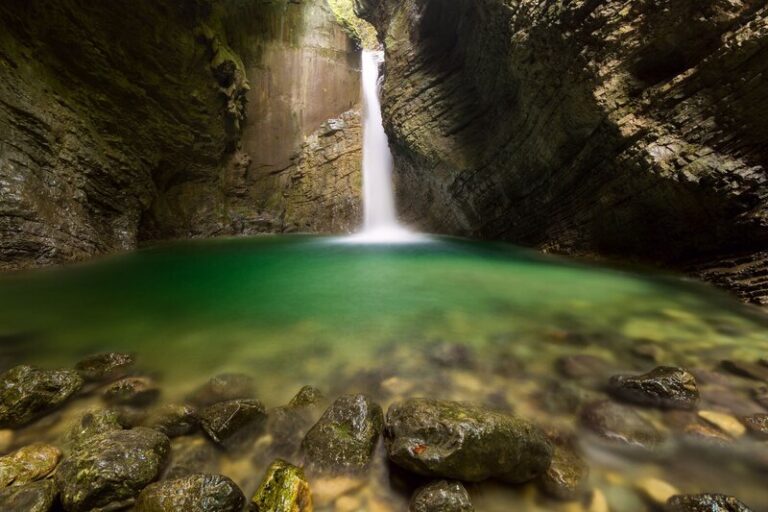
The Best Slovenia Itinerary for Families (7–10 Days)
Ten days in Slovenia is the perfect amount of time to see the highlights, and it fits in more than you’d expect. Alpine lakes, underground caves, a castle built into a cliff, mountain passes with 50 hairpin turns, and a stretch of Adriatic coast that feels more like Italy.
I’ve road-tripped through there with my kids and it turned out to be one of the best family trips we’ve taken. This Slovenia itinerary maps out the highlights in just over a week, with a flexible day-by-day plan you can adapt to 7 or 10 days depending on your timeline.
Slovenia Itinerary At-a-Glance
Here’s the route we’d recommend for most families, starting and ending in Ljubljana:
- Days 1–2: Ljubljana
- Day 3: Lake Bohinj
- Days 4–5: Lake Bled + Vintgar Gorge
- Day 6: Postojna Cave + Predjama Castle
- Day 7: Škocjan Caves
- Days 8–9: Piran + the Slovenian coast
- Day 10: Return to Ljubljana (or fly out)
If you’re coming from Austria (or want to add a scenic mountain drive), see the note at the end about the Vršič Pass and Kranjska Gora — it’s a worthwhile addition that also works well as an opening leg.
Getting Around Slovenia
A rental car is the best way to do this itinerary. Public transit connects the major towns, but many of the best spots, like Vintgar Gorge, Predjama Castle, Škocjan, and the Vršič Pass, are difficult or impossible to reach without one. We rented through Discover Cars and had a great experience; it’s a good option for comparing prices and finding pick-up locations across Slovenia and Europe.
Slovenia uses a vignette system for its highways, so you’ll need to buy a sticker for your windshield when you arrive. It’s inexpensive and covers the whole country, and your rental company can point you in the right direction or you can purchase online at ……
The roads are well-maintained and easy to navigate, and distances are short. Ljubljana to Lake Bled is about 40 minutes. Bled to Piran is just over two hours. It’s a small country, and that works in your favour.
10 Day Slovenia Itinerary
Day 1 & 2: Ljubljana
Most families will fly into Ljubljana (or arrive by train from a neighbouring country), and it’s worth giving the capital at least two full days before heading out to explore the rest of the country.
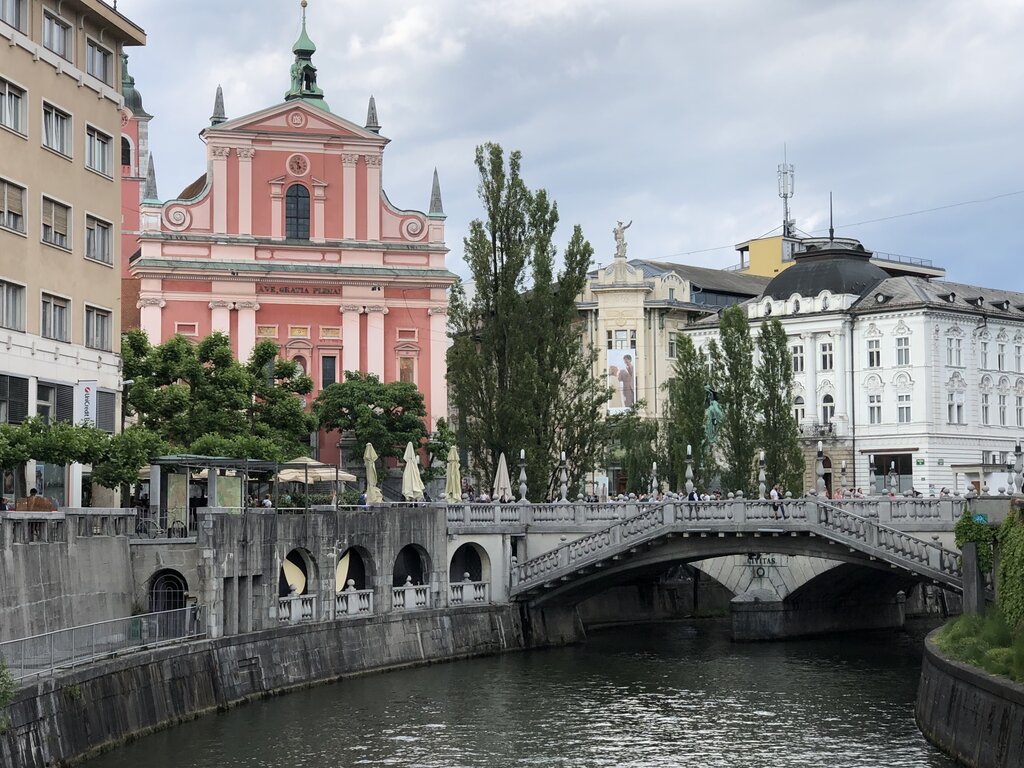
Ljubljana is compact, walkable, and honestly fun with kids. The old town sits along the Ljubljanica River, with outdoor cafés, cobblestone streets, and a castle rising above it all. It has the energy of a city without ever feeling overwhelming, and it ended up being one of my kids’ favourite stops on the trip.
What to Do in Ljubljana
Ljubljana Castle is the natural starting point. You can take the funicular up from the old town, or if your kids are good walkers, the trail on foot is one of the highlights. We chose to walk, and it ended up being one of the best decisions of the day — the paths wind through the trees with great spots to peer out over the city.
Once you’re back down, spend time wandering the old town. The streets are full of dragons, Ljubljana’s official symbol, and spotting them becomes a fun activity for kids. Keep an eye out on shop signs, fountains, doorways, and anywhere else they might be hiding.
The Central Market along the river is a great stop for snacks, fresh produce, and picnic supplies. It’s busiest in the morning and starts winding down in the early afternoon, so time your visit accordingly.
In the afternoon, cross the Triple Bridge and explore the three historic squares nearby — Mestni Trg, Stari Trg, and quieter Gornji Trg. The Dragon Bridge just outside the market is another must-see, with four large bronze dragons guarding the corners. After spotting small dragons all morning, seeing them this size made my kids day.
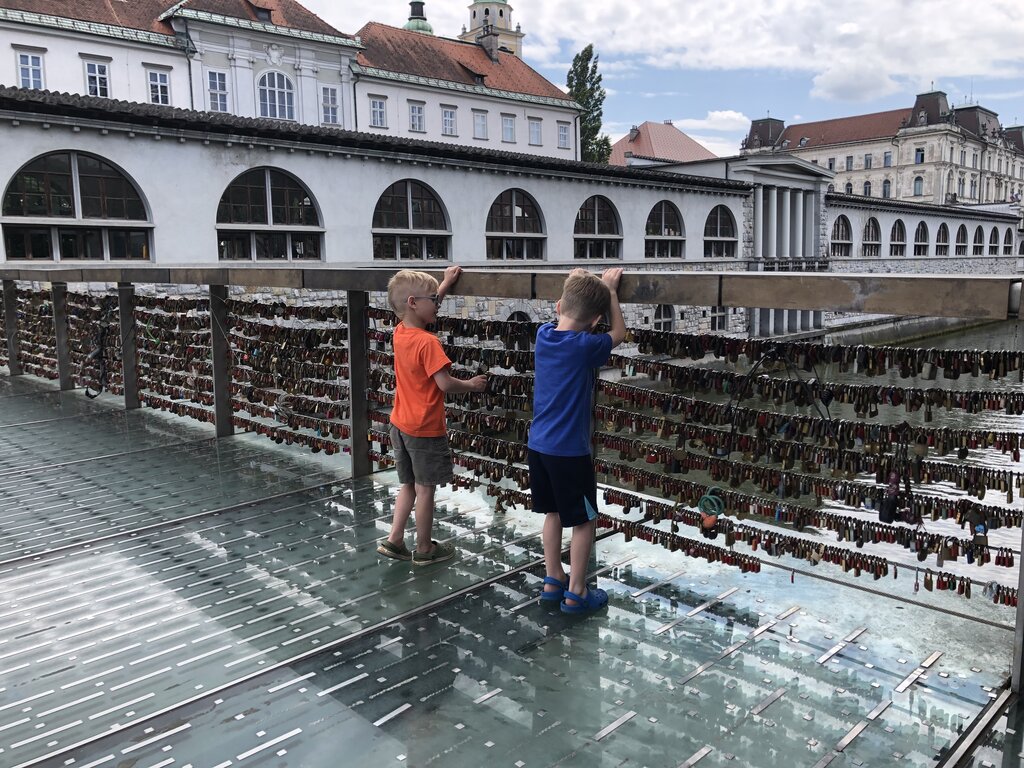
Butcher’s Bridge, lined with love locks, is a short walk further and always a fun spot with kids.
Tip: Leave time in the evening for a riverside café stop. The city in the late afternoon light, with the bridges reflected in the water, is one of those Ljubljana moments worth sitting still for.

Where to Stay in Ljubljana
For families, staying close to the old town is the most convenient option. We’d suggest looking at hotels or apartments near the city centre, saves having to arrange transportation in the next day.
For a full guide to accommodation options in Ljubljana, including specific hotel picks, check out our post on where to stay in Ljubljana.
Day 3: Lake Bohinj
From Ljubljana, it’s about an hour’s drive northwest to Lake Bohinj, and it’s worth going here before Bled. Bohinj is quieter, less commercial, and a really beautiful place to slow down after a couple of days in the city.
This is Slovenia’s largest natural lake, and it sits inside Triglav National Park, surrounded by mountains and forest. When we arrived, there were farmhouses across from our guesthouse, trails leading off in every direction, and almost no one around. After a few busy travel days, it was exactly what we needed.

What to Do at Lake Bohinj
There are plenty of things to do at Lake Bohinj, whether you want to get out on the water, hike to a waterfall, or just sit by the lake and do nothing.
Swimming in the lake is a highlight, especially in summer when the water warms up. We visited in June and my kids jumped in without hesitation. I was a bit more cautious about the temperature, but they stayed in longer than I expected.
The traditional wooden boat across the lake is something kids get genuinely excited about. It runs between Ribčev Laz and Ukanc, with a local guide who points out things you’d otherwise miss. My kids had seen photos of it before the trip and had it on their list from day one, and it lived up to the anticipation. We took it one way and then walked back along the shore.
Savica Waterfall is a 20–30 minute uphill hike from the parking area and absolutely worth it. The waterfall splits into two streams underground before cascading 78 metres into the pool below. The trail is well-maintained and the views of the lake along the way are beautiful.
For something a bit different, the Vogel Cable Car is a 7-minute ride up into the Julian Alps with panoramic views of the lake and Mount Triglav. Even if you’re not planning to hike at the top, the ride itself is worth it.
If you have extra time, Mostnica Gorge, just 3 km from the lake, has a similar feel to Vintgar Gorge but with far fewer people. The trail follows a river through a narrow canyon with crystal-clear pools and wooden bridges. It’s a great option if you want one more outdoor activity before moving on.
Tip: If you’re visiting in July or August, a free shuttle runs from the lake to Savica Waterfall. Outside of peak season, you’ll need to drive.


Where to Stay at Lake Bohinj
We stayed at Hotel Gasperin Bohinj in Ribčev Laz and loved it. Spacious rooms, a great breakfast, a 24-hour honesty bar, and owners who gave us some of the best local tips of the whole trip. And the lake was just a short walk away.
Hotel Bohinj is another excellent option, with a 4-star property right on the lakeshore, mountain views and a pool. It books up fast, so reserve early.
Days 4–5: Lake Bled + Vintgar Gorge
Lake Bled is about 25 km east of Bohinj, and while it’s undeniably one of the most photographed places in Slovenia, it’s easy to see why. The lake really is that colour, an almost unreal shade of turquoise, and the tiny island church and castle perched on the cliff above are as stunning in person as in any photo.
We visited Lake Bled twice on our trip, which tells you something about how it went.
What to Do at Lake Bled
The pletna boat to Bled Island is one of the top things to do in Bled, and was the highlight for my kids. These traditional flat-bottomed wooden boats are the only way to reach the island (besides rowing yourself), and they’ve been operating for centuries — the right to be a pletna oarsman is passed down through families. Once on the island, you have about 30–40 minutes to climb the 99 steps to the Church of the Assumption and ring the wishing bell before heading back.
One practical note, some pletna boats don’t take credit cards. The first time we visited Bled, I didn’t have cash and we had to skip it. My kids, and honestly I’ll admit it, me too, were pretty disappointed. So we made a point to have a second visit, and I came prepared with cash, and of course, that boat took credit cards. Bring both just in case.
Bled Castle is worth the visit, especially if your kids like castles (mine love them). It’s the oldest and one of the most unique castles in Slovenia, sitting 120 metres above the lake with sweeping views. Inside, there’s a small museum, a 16th-century chapel, and a working medieval printing press where kids can see how old-style books were made.
Walking the lake loop is an easy 6 km trail that takes 1–2 hours depending on how often you stop. My kids loved spotting fish in the clear water along the shore. If you want more of a challenge, the hike to Ojstrica viewpoint (about 20–30 minutes up) gives you the classic postcard view of the lake from above, the one you see on postcards with the tiny island, emerald water, and mountain backdrop all at once.
And don’t skip the Bled cream cake at Hotel Park Café, where the original recipe was created in 1953. It’s layers of puff pastry, vanilla custard, and whipped cream, dusted with icing sugar. It was on my kids’ list before we even arrived, and they said it lived up to the reputation.


Vintgar Gorge (Day Trip from Bled)
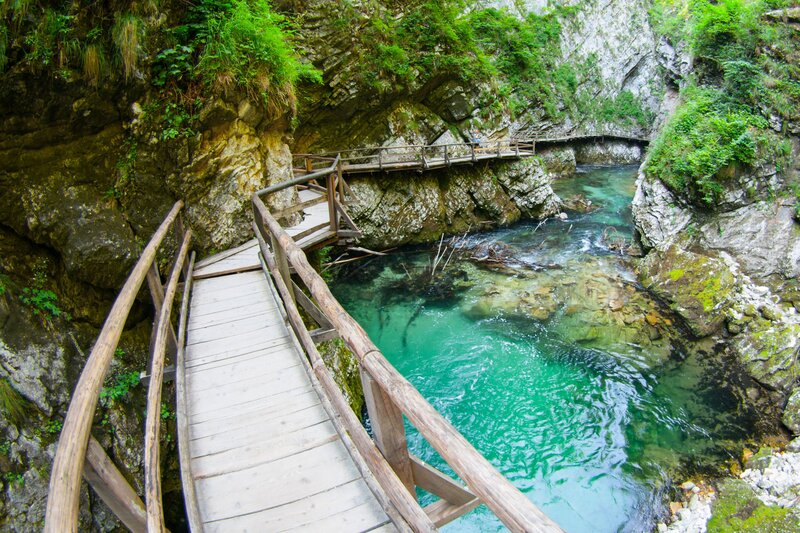
Just 10 minutes from Bled, Vintgar Gorge is one of the most scenic spots in Slovenia and a highlight of our whole trip. A 1.6 km wooden boardwalk winds through a narrow canyon above the Radovna River, passing waterfalls, rapids, and pools of turquoise water.
What I didn’t realize when we planned our day was that the trail is one-way, and you can’t walk back the same route. The return hike adds another 1.5–2 hours. We took the shorter Red Trail back and it was steeper than expected, taking closer to 1.5 hours instead of the recommended 45 minutes. If I were to do it again, I’d take the longer Green Trail — it’s sunnier and offers better views.
Plan for close to 3 hours total, not the quick hour I originally budgeted.
Tip: The Vintgar Gorge shuttle runs from the end of the trail back to Bled if you’d rather skip the return hike. Entry is by timed slot and books up in summer, so reserve in advance.
Here’s everything to know about hiking Vintgar Gorge.
Where to Stay at Lake Bled
Hotel Park is the top pick, as it’s right on the lake, with private balconies, an indoor pool, and the café that serves the original Bled cream cake. Garni Hotel Savica is another great family option with free access to the pool complex at the neighbouring Rikli Balance Hotel, which has a waterslide and six indoor/outdoor pools.
Day 6: Postojna Cave + Predjama Castle
From Bled, head south toward Postojna. It’s about an hour and 15 minutes by car and an easy drive. Plan to arrive in time for a morning cave tour, then head to Predjama Castle in the afternoon.
Postojna Cave
Postojna Cave is one of Slovenia’s most famous attractions, and you’ll see why pretty quickly. It’s Europe’s largest tourist cave and the only one in the world where you ride a train through the tunnels. The 10-minute electric train ride takes you 3.7 km into the cave before the walking portion begins.
My kids were excited to see the olm, a pale, eyeless salamander also known as the “human fish” or “baby dragon” that lives in the cave’s underground rivers. We only caught a quick glimpse during the tour since we were near the back of the group, but the Vivarium near the entrance lets you see them up close at your own pace. My kids loved it.
The cave stays at 10°C year-round, so bring a warm layer regardless of the weather outside. For more info, here’s what you can expect when visiting Postojna Cave.
Tip: Book tickets online in advance, especially in summer. The tours fill up and there can be a long wait to buy tickets on-site. The combo ticket with Predjama Castle and the Vivarium offers the best value.


Predjama Castle
About 15 minutes from Postojna, Predjama Castle is one of those places that doesn’t look entirely real at first glance. It’s a medieval castle built directly into the face of a cliff, with part of the structure carved into the cave behind it.
We weren’t sure whether to just admire it from the outside or go in. Our full guide to visiting Predjama Castle breaks down exactly what to expect inside, but the short answer is: go in.
The audio guide is well-marked and easy to follow, and my kids were more on top of it than I was. At one point I thought we’d finished a section, and they quickly corrected me and made us go back because I’d missed a room.
The story they loved most: Erazem, the so-called Robin Hood of Slovenia, hid in the castle for over a year while under siege, smuggling supplies through a secret tunnel in the cave. He was eventually killed by a cannonball while using the outhouse, which was attached to the outside wall, after someone tipped off the enemy. The audio guide tells it in a way that’s both historical and just gross enough to be memorable for kids.
The castle was quiet when we visited, which meant we could take our time without being rushed through. Compared to the scale of Postojna, it felt like a completely different kind of experience, but in the best way.


Day 7: Škocjan Caves
Škocjan Caves is about 45 minutes southwest of Postojna, and while it’s often compared to Postojna, the two experiences are very different. If Postojna feels like a well-run attraction, Škocjan feels like a natural wonder.
This UNESCO World Heritage Site is best known for its massive underground canyon. Walking through it — crossing a bridge suspended high above an underground river, listening to the sound of rushing water echoing through caverns with soaring ceilings — didn’t quite feel real. My kids were 8 when we visited and were completely into it.
There are more stairs and uneven sections than Postojna, so it’s better suited to kids who are comfortable walkers. Strollers aren’t an option here.
For us, the most impressive part was the underground river itself, and hearing it rush through the cave as we walked the path above it. It hits you, in a quiet way, just how long it took for all of this to form.

Days 8–9: Piran and the Slovenian Coast
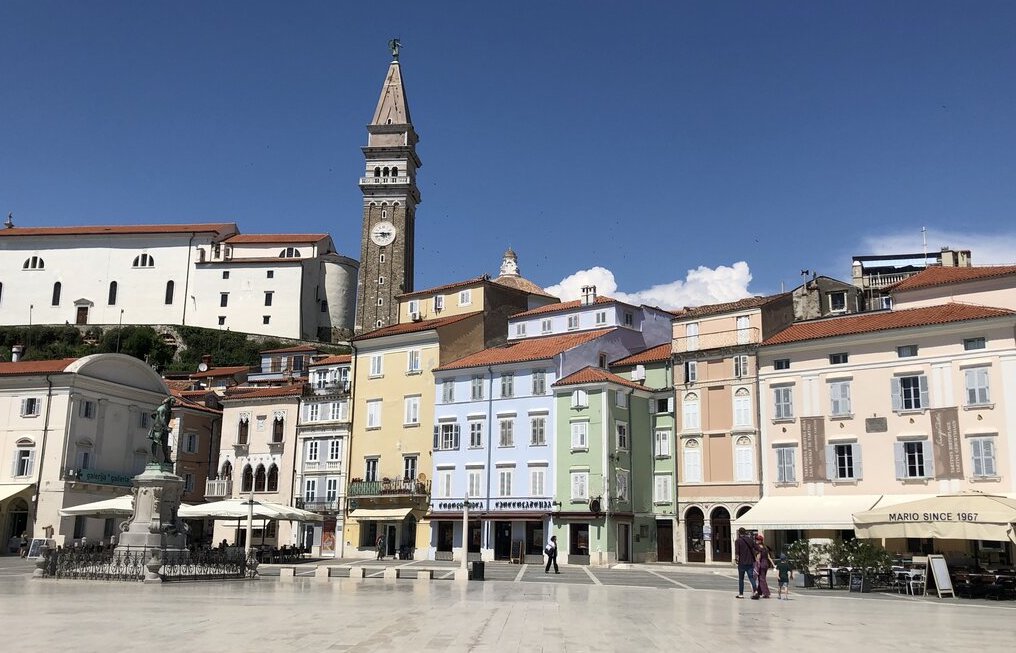
From Škocjan, it’s a short drive southwest to Piran, around 30 minutes, and it feels completely different. After mountains, forests, and caves, you arrive at a small coastal town on the Adriatic that feels more like Italy than Slovenia.
Narrow cobblestone streets, pastel buildings, outdoor cafés spilling into the squares, the smell of seafood drifting from tiny restaurant kitchens. My kids loved running a little ahead through the alleys, eager to see what was around the next corner. It reminded me of Tropea in southern Italy, that same unhurried energy and mix of sea views and stone archways.
What to Do in Piran
There’s plenty of things to do in Piran, but Tartini Square is where every visit naturally begins. Named after violinist Giuseppe Tartini, who was born here, it’s the heart of the old town and a good place to get your bearings.
Climbing the bell tower of St. George’s Church was a highlight for my boys — 146 steps, straight up, with a view of Tartini Square, the harbour, and the Adriatic at the top. Fair warning — the bells ring every 15 minutes and they’re very loud. Keep an eye on the time before heading up.
The city walls offer a wider, more open view of the whole peninsula and are worth the short walk if you have time. I’d do both the bell tower and the walls if you can — they give you two completely different perspectives on the town.
Walking to the Punta Lighthouse at the tip of the peninsula is an easy, pleasant stroll. On the way, keep an eye out for the small mermaid statue tucked into the rocks by the water. It’s easy to miss, but my kids loved scrambling over the rocks to find it and get a photo.
Although Piran is on the coast, swimming in Piran means stone platforms and ladders into the sea rather than sandy beaches. If sand is important, nearby Portorož is a better choice.
Save time for fresh seafood by the harbour and stay for the sunset if you can. Piran sits on a peninsula, so the views over the water are open in every direction, and the evening light is worth staying for.
Tip: You can’t drive into Piran’s old town. Park outside the centre and walk in, or take the free shuttle.

Where to Stay on the Slovenian Coast
We stayed at Villa Bellevue in Portorož and found it a great base — comfortable, quiet, with views over the water, and an easy walk down to both the beach and Piran. Portorož has easier parking and more traditional beach access than Piran itself, which made it the right choice for us.
If you want to be right in the old town, Hotel Piran on the waterfront and Art Hotel Tartini overlooking the square are both worth looking at.
Day 10: Head Back to Ljubljana
If you’re flying out of Ljubljana, the drive from Piran is about 1.5 hours, which leaves time for one last coffee and a walk along the river before heading to the airport.
If you have a half day to spare, the Lipica Stud Farm — home of the famous Lipizzaner horses — is on the way and worth a stop if you have horse-lovers in the family.
Adding the Vršič Pass
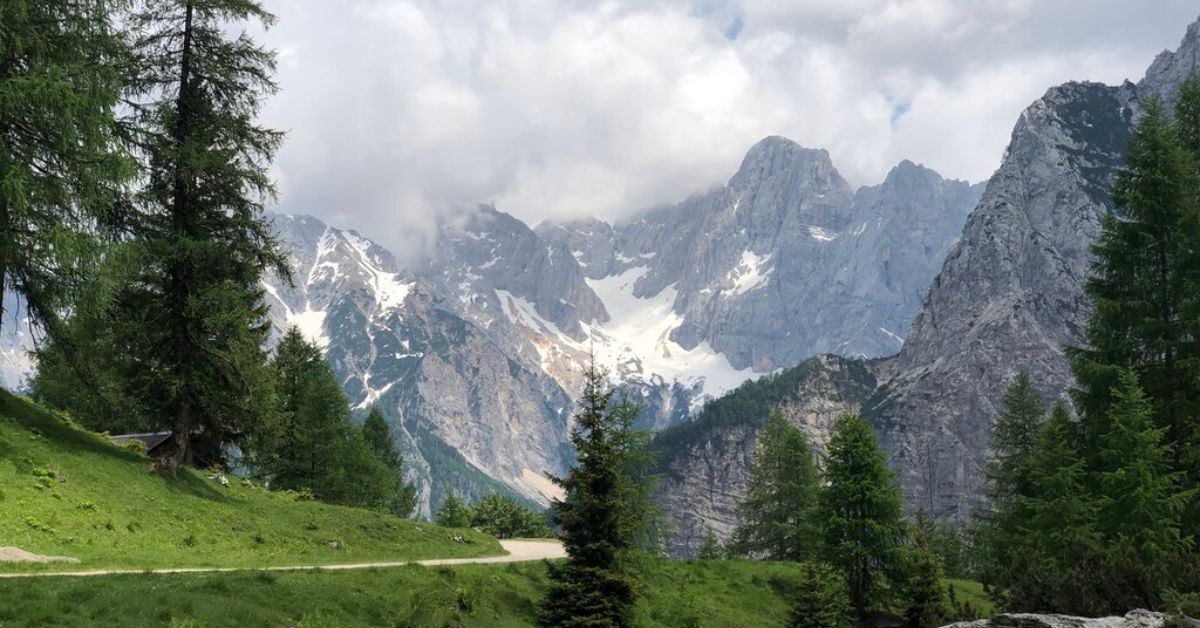
If you’re arriving from Austria, or if you have a day or two to spare, the Vršič Pass is one of the most scenic drives in Europe and not to be missed.
This mountain road climbs through the Julian Alps, and is Slovenia’s highest pass, connecting the alpine town of Kranjska Gora with the Soča Valley. It has 50 hairpin turns (each one numbered), dramatic mountain views, and a handful of fascinating stops along the way.
We came from Austria, so this was our first experience in Slovenia, driving over the Vrsic pass before heading to Bohinj. For most people, it works better as a day trip from Bled or as an add-on if you’re extending the itinerary, but Kranjska Gora is worth spending some time in too.
Where to Stay Near the Vršič Pass
Kranjska Gora is the best base. The Ramada Resort Kranjska Gora is centrally located with mountain views. Vitranc Apartments work well for families who want more space and a kitchen.
How to Turn This Into a 7-Day Slovenia Itinerary
If you only have 7 days in Slovenia, you can still follow this route — you’ll just need to move a bit faster and skip a couple of stops.
Here’s what I’d adjust:
- Combine Ljubljana into 1 day instead of 2
- Choose either Postojna Cave or Škocjan Caves (not both)
- Skip the Slovenian coast (Piran) or shorten it to a quick overnight
- Keep Lake Bohinj and Lake Bled — those are worth prioritizing
Sample 7-day route:
- Day 1: Ljubljana
- Day 2: Lake Bohinj
- Days 3–4: Lake Bled + Vintgar Gorge
- Day 5: Postojna Cave or Škocjan Caves
- Days 6–7: Piran or return to Ljubljana
Practical Tips for Your Slovenia Itinerary
Best Time to Visit Slovenia
June and September are the sweet spots. It’s warm enough for swimming in lakes and rivers, with lighter crowds than peak summer. July and August are beautiful but busy, especially at Lake Bled.
We visited in June and found it perfect — the water was cold but swimmable, the passes and trails were open, and the crowds hadn’t peaked yet.
How Many Days Do You Need?
7 days gets you the highlights if you move at a reasonable pace. 10 days lets you breathe, spend longer at Bohinj, add the Vršič Pass, and still have time to slow down in Piran. If you can, err on the longer side, Slovenia is worth the extra time.
Driving Tips
- Vignette required for highways. You can buy one when you arrive or at the border.
- Distances are short, but mountain roads take longer than you expect. Budget extra time for the Vršič Pass.
- Parking in old towns like Piran and Ljubljana requires planning ahead — both have restrictions on driving into the centre.
Money
Slovenia uses the euro. Most places take cards, but a few, including some pletna boats at Lake Bled, only take cash. Keep some euros on hand.
Language
English is widely spoken throughout Slovenia, especially in tourist areas. Getting around, ordering food, and asking for directions is easy.
Our Take on Slovenia as a Family Destination
Slovenia is one of my favourite road trips we’ve ever done. You see a lot on this route, but it never feels rushed, and you’re not stuck in the car all day getting between stops. One day you’re at a quiet alpine lake, the next you’re walking through caves or exploring a coastal town that feels more like Italy.
My kids were already arguing about which part they’d go back to before we’d even left. That’s usually a good sign.
Looking for More?
If you’re starting in the capital, our post on things to do in Ljubljana with kids walks you through the old town, the castle, and the best parks and playgrounds, and if you haven’t booked accommodation, check out our guide on where to stay in Ljubljana. If you’re planning your time out of the city, our Lake Bled guide and Lake Bohinj guide cover what to do at the lakes, and the best day drips from Ljubljana explore a bit more of the country.
If you’re looking to see the attractions, we’ve got a full guide on what to expect at Postojna Cave, a breakdown of Postojna vs Škocjan Caves to help you decide which one is right for your family (or whether to do both), plus a dedicated guide to Predjama Castle if you want to know what to expect inside. Heading to the coast? Our Piran guide covers everything from the bell tower to the sunset, and if you’re doing the mountain drive, the full Vršič Pass guide has all the stops and driving tips you need.